Servicing capacity is trapped in repeatable work
Calls, summaries, follow-ups, and case preparation consume time that experienced teams need for hardship, disputes, and exceptions.
Every decision governed. Every action traceable.
LendEasy orchestrates loan servicing operations with AI agents bounded by a lender’s policies and backed by human judgment when needed. The result: audit-ready operations by design, the ability to scale a portfolio without scaling headcount, and a seamless experience for borrowers, 24/7
Keep your current lending core—or use ours. No forced migration.
AI capabilities
Why now
Lenders need more capacity without creating a parallel AI operation. People and AI should work from the same permissions, policy checks, ownership, and evidence.
Calls, summaries, follow-ups, and case preparation consume time that experienced teams need for hardship, disputes, and exceptions.
Routine questions and next steps cannot always wait for business hours or a handoff between disconnected systems.
People and AI need the same permissions, policy checks, accountable ownership, and evidence—not another isolated toolchain.
Why governed servicing changes the outcome
Compare the same call across today’s fragmented servicing landscape and one governed flow on LendEasy—from Maya’s instruction through protection, policy-bound approvals, borrower communication, core execution, and confirmation.
Maya Johnson
Loan ••••1842 · 30 days overdue
“I’m in the hospital after emergency surgery. I can’t talk. Stop calling me—I need help with a payment deferral.”
The system of record exports yesterday’s delinquency snapshot for the dialer.
scheduled extractThe fixed payment script continues.
place callThe hardship note stays inside the CRM.
log noteThe hardship request advances separately from the active dialer campaign.
open caseMaya’s case moves across teams while the dialer continues from an older LMS snapshot and controls are applied by hand.
The case advances on Maya’s verified channel while voice and campaign outreach remain held.
Document intelligence separates required servicing facts from unrelated medical detail before the case advances.
Borrower communication, any required acceptance, the core update, and final confirmation remain one traced outcome.
The reversible hold happens first. Policy determines whether the loan change needs a person’s approval before the outcome executes with its evidence.
End-to-end governance
From the first signal through eligibility decisions, human approvals, borrower communications, payments, and lending-core updates, LendEasy applies current facts, permissions, and rules — Reg F, SCRA, Regulation Z, Regulation E, and your state rules — before the workflow moves forward.
Each rule records its source, jurisdiction, effective date, and version, so past actions stay linked to the rule used at the time.
Eligibility decisions, borrower communications, approvals, payments, and lending-core updates are checked against current facts and permissions before the workflow advances.
Protected-borrower restrictions, contact limits, and approval requirements stay active from the opening signal through resolution. When a bankruptcy filing matches at 9 a.m., the 10 a.m. dialer list already knows.
Every decision, approval, action, and outcome stays connected in tamper-evident records your auditors can search and export.
Each task type gets its own level. A scoped kill switch can stop affected AI work instantly.
Where it works
Most design partners start by replacing manual queues with AI workers in first-party collections, then expand across every operational flow — running all servicing tasks through the exact same policy gates, unified cases, and audit trails.
Adopt without a forced migration
LendEasy adds the same governed servicing layer either way. Current account facts flow in; approved updates flow back.
The founding story
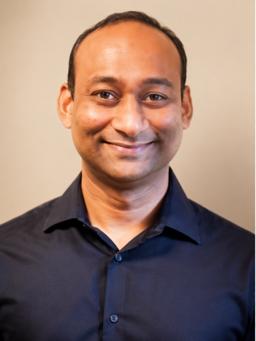
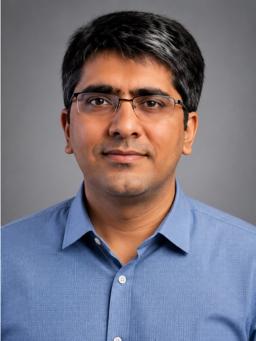
LendEasy's founders spent their careers building lending and banking platforms used worldwide. They started LendEasy to fix the compliance and scaling bottlenecks they experienced building core banking systems—creating one operating layer for people, AI, and policy enforcement.
A serial fintech founder and executive, Vishwas co-founded Finflux (acquired by M2P Fintech) and served as Chief Product Officer at Mbanq and Chief Platform Officer at LendAPI—building full-stack U.S. platforms for deposit accounts, card issuing, loan servicing, and payment rails. As VP of Apache Fineract and Chief Community Engineer at the Mifos Initiative, he co-architected open core banking systems serving hundreds of millions of customers worldwide.
Ullas is a distributed systems architect with over 14 years at Amazon Web Services, where he built high-scale data platforms for AWS Commerce and Billing, handling millions of transactions per second and petabyte-scale data. At LendEasy, he leads engineering, building AI agents and the control plane for automated, compliance-native loan servicing.
Meet Lena, LendEasy’s first-party collections voice agent. A founder will run the workflow against your operating model—not a generic product tour.
Bring one real servicing scenario
We will trace where AI works, where a person decides, what reaches the lending core, and what the final audit record contains.
FAQ
LendEasy is an end-to-end loan servicing platform built around a single governed workspace where AI workers and human teams operate side by side. It continuously listens for servicing signals—from missed payments and borrower calls to external events like bankruptcy filings and military service status changes—and automatically executes full-cycle servicing workflows, including first-party collections, payment resolution, and hardship assistance. Whether using our built-in loan management system or your existing core, LendEasy evaluates every action against your policies and approval limits, escalates to human judgment when required, and maintains a complete, auditable record.
We're building LendEasy alongside a small group of design partners who service loans every day. Walk through the AI agents, policy checks, and servicing workspace with the founding team.